
Menopause care for the whole you
Hot flashes, restless nights, mood shifts and weight changes often arrive together. Joyous is bringing hormone replacement therapy (HRT) online, with licensed clinicians who look at the full picture.
Starts at
$65
then from $85/month


Menopause care that takes you seriously
7.4 years is the median time frequent hot flashes or night sweats lasted for women in a large US study.¹
82% more medical visits in a year for women with untreated hot flashes and night sweats than for similar women without them.²
You don't have to just push through.
Joyous is bringing hormone replacement therapy online, with licensed clinicians who listen, look at your full health picture and help you decide what's right for you.

What happens to your hormones
You reach menopause 12 months after your last period.³ In the years before that, called perimenopause, estrogen can rise and fall from month to month before settling at a much lower level. Progesterone drops too, as ovulation becomes less regular.
These shifts can bring hot flashes, broken sleep and mood changes, and one symptom can set off the next. Night sweats break up your sleep. Poor sleep drains your energy. Low energy makes it harder to stay active. The transition often takes several years, and hot flashes can continue well after periods stop.

Estrogen levels
Estrogen levels rise with HRT
Estrogen levels drop without HRT
HRT may help ease symptoms like hot flashes, night sweats and vaginal dryness.*
Premenopause
Perimenopause
Postmenopause
FAT GAIN SPEEDS UP
2x
the rate of fat gain at the start of the menopause transition, while lean mass began to fall, in a long-running US study.⁴
MUSCLE DECLINES
3-8%
is roughly how much muscle mass declines per decade after age 30, and the pace picks up after 60.⁵
ACHES ARE COMMON
57%
of women in perimenopause had joint or muscle pain in a review of 37 studies, compared with 40% before perimenopause.⁶
Why weight can change in midlife
As estrogen drops, your body may store more fat around your middle, even if your habits haven't changed.⁷
Muscle naturally declines with age, and lower estrogen may speed that up. Less muscle can make weight harder to manage.
Add poor sleep, aches and low energy, and the approach that used to work may stop working. That's biology, not a willpower problem.


How hormone replacement therapy works
HRT replaces some of the estrogen your body makes less of, which may ease symptoms at their source.*
Leading menopause experts consider it the most effective treatment for hot flashes and night sweats.⁸ When you're sleeping better and feeling steadier, it may also be easier to keep up the habits that support a healthy weight.*
If you still have a uterus, estrogen is paired with progesterone. HRT is prescription only and isn't right for everyone. For healthy women under 60 or within 10 years of menopause, menopause experts say the benefits of treating bothersome symptoms generally outweigh the risks.⁸
Care built around you
Your clinician looks at your symptoms, health history and goals, helps you choose the type, form and dose of HRT, and adjusts it as your needs change.
#1
Most effective treatment for hot flashes and night sweats, according to The Menopause Society⁸
Where you may feel the difference
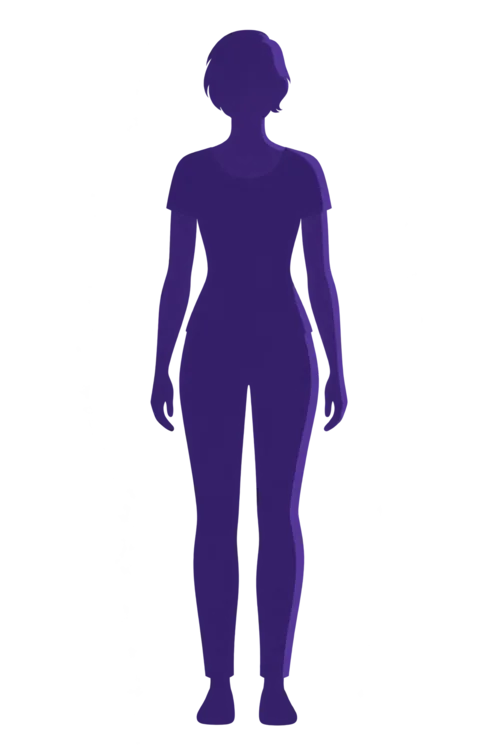
By restoring some of the estrogen your body has lost, HRT may ease many common menopause symptoms.* Everyone responds differently, and your clinician will help you focus on what bothers you most.
Hot flashes
Night sweats
Waking at night
Daytime tiredness
Mood swings
Irritability
Low mood
Brain fog
Trouble focusing
Low sex drive
Joint aches
Dry skin
Vaginal dryness
Vaginal itching
Painful sex
Bone loss
Beyond symptom relief: the long-term picture
HRT is prescribed mainly to ease symptoms. Research suggests it may also support long-term health in the areas below. It isn't prescribed to prevent disease on its own, the benefits depend on when you start, and your clinician will weigh them against the risks with you.
Stronger bones⁸
Lower type 2 diabetes risk⁹
Heart health, when started early¹⁰
Lower colon cancer risk¹¹

Licensed clinicians, from first visit to follow-up
Joyous has supported more than 120,000 patients with online care led by licensed clinicians. HRT will work the same way: a clinician reviews your health history, and your care doesn't stop once you have a prescription.
Dr. Bobbi Leben
Joyous Chief Medical Officer
01
Licensed US clinicians
A licensed clinician reviews every request online and decides whether HRT is right for you.
02
A plan that fits you
Your treatment is matched to your symptoms and health history, with estrogen plus progesterone if you still have a uterus.
03
Care that continues
Your clinician checks in on how you're feeling and can adjust your dose as your needs change.



FAQs

What can I expect after starting HRT and when will I feel a difference?+−
Many women start to notice changes within a few weeks, such as fewer hot flashes, better sleep and a steadier mood.*
It can take a few months to feel the full effect, and your clinician may adjust your dose along the way. Everyone responds differently.
What are the potential side effects?+−
Common side effects include bloating, breast tenderness and spotting or light vaginal bleeding. They can feel similar to certain points in a menstrual cycle, early pregnancy or hormonal birth control, and they often settle down in the first few months.
Your clinician can help you manage side effects. That may mean changing your dose or the type of HRT you use.
HRT also has less common but more serious risks for some women, including blood clots and stroke. Your risk depends on your age, health history and the form of HRT, and your clinician will go over it with you before prescribing.
Can HRT help with a low sex drive?+−
It can help for some women. Lower estrogen can cause vaginal dryness and painful sex, which often dampen desire. HRT may help ease these symptoms.*
In a Cochrane review of 27 studies with more than 16,000 women, hormone therapy was linked to a small to moderate improvement in sexual function for women with menopause symptoms or in early menopause.¹³
Desire has many causes, including sleep, mood, stress and your relationship, so your clinician will look at the full picture with you.
How is HRT administered?+−
HRT comes in several forms, including skin patches, gels, creams, sprays and pills. Everything except the pills delivers hormones slowly through your skin. Pills are taken by mouth.
Most patches are changed once or twice a week. The other forms are usually used every day. Your clinician will help you choose the form that fits your health and routine.
Why is Joyous offering HRT?+−
Menopause rarely affects just one thing. Hot flashes, poor sleep, mood changes and weight gain often show up together and make each other worse. HRT is one of the best-studied options for easing several of these at once.*
Research also suggests HRT may support metabolic health in menopause, including how your body handles blood sugar and where it stores fat.* Joyous has supported more than 120,000 patients with online, clinician-led care, and we're bringing that same approach to menopause.
How will I know how to use my HRT?+−
Your clinician will explain how and when to use your treatment, and instructions will come with your prescription. If questions come up after you start, your care team is there to help.
Is HRT only intended for those experiencing severe menopause symptoms?+−
No. HRT is most often recommended for moderate to severe symptoms, but it can also be a reasonable option for some women with milder ones.
HRT isn't right for everyone. It's generally not recommended if you have or have had:
- Breast cancer or another hormone-sensitive cancer
- Blood clots, stroke, a heart attack or heart disease
- Active liver disease
- Unexplained vaginal bleeding
Your clinician will review your full health history to decide whether HRT is appropriate for you.
I have a healthy diet. Will I still gain weight during menopause?+−
You might. Changing hormones affect your metabolism, so weight can creep up even when you eat well. Lower estrogen can also shift more fat to your belly, even if the number on the scale stays the same.⁷
Eating well still matters. In midlife, it just may not be the whole story.
Is it true that once you start HRT, you can never stop?+−
No. You can stop HRT at any time. Some women use it for a few years, and others use it longer. How long is right for you depends on your symptoms, health and goals, and you'll review it with your clinician over time.
If you want to stop, talk to your clinician first. They can help you lower your dose gradually so the change isn't sudden.
Will my risk of breast cancer go up using hormones?+−
It's an important question, and the answer depends on the type of HRT, how long you use it and your own health history.
Much of the concern comes from the Women's Health Initiative (WHI), a large study whose early results, published in 2002, linked HRT to a higher breast cancer risk. Many women and their doctors stopped HRT soon after. Later analyses, including some by the study's own researchers, gave a more nuanced picture. Women in the study were older on average than most women who start HRT today, and it used older types of hormones.
In the WHI, women taking estrogen alone (usually prescribed for women without a uterus) had a lower rate of breast cancer. Estrogen combined with a synthetic progestin was linked with a small increase. Long-term follow-up found no overall rise in cancer deaths among women who had used HRT.
A more recent study using UK health records found that estrogen alone, and estrogen with micronized progesterone, were not linked to higher breast cancer risk, while synthetic progestins were. HRT use overall was still linked to a small increase, which is why the type of hormone matters.¹²
A review of many studies, including WHI data, also found that women who started HRT before 60 or within 10 years of menopause had a lower risk of death from any cause.¹⁰
Your clinician will look at your personal and family history and talk through what this means for you before prescribing.
What happens when I join the waitlist?+−
We'll email you when Joyous HRT is available. Joining is free and doesn't commit you to anything.
When it's available, you'll complete an online health review, and a licensed clinician will decide whether HRT is appropriate for you.
How it will work
Step 1
Join the waitlist
Add your email. We'll let you know when HRT is available.
Step 2
Online clinician review
Share your symptoms and health history online. A licensed clinician reviews them and decides whether HRT is right for you.
Step 3
Treatment shipped to you
If you're prescribed HRT, it ships to your door from a US pharmacy.
Step 4
Ongoing support
Your clinician checks in on how you're feeling and adjusts your dose when needed.
Be the first to know when HRT arrives
Join the waitlist and we'll email you when Joyous HRT is available.
We'll only email you about HRT availability. Unsubscribe anytime.
Joyous HRT is not yet available. Joining the waitlist does not guarantee eligibility or a prescription. Not available in all states.
Prices shown are planned launch prices for Joyous HRT and may change before it becomes available.
Hormone replacement therapy is available by prescription only. A licensed clinician decides whether HRT is appropriate for you based on your health history and may decide it is not. Individual results vary.
*Benefits described on this page are possible effects reported in research and are not guaranteed. HRT is not a weight-loss medication.
HRT has risks, which for some women include blood clots, stroke and breast cancer. Your risk depends on the type of hormone, dose, your age and your health history. Talk with your clinician about your personal risks and benefits.
Statistics on this page come from the numbered sources below and describe groups of women in research studies, not what any one person will experience. The estrogen chart is illustrative and not to scale.
This page is for general information and is not medical advice. If you are having a medical emergency, call 911.
- Avis NE, et al. Duration of menopausal vasomotor symptoms over the menopause transition. JAMA Intern Med. 2015.
- Sarrel P, et al. Incremental direct and indirect costs of untreated vasomotor symptoms. Menopause. 2015.
- National Institute on Aging. What Is Menopause?
- Greendale GA, et al. Changes in body composition and weight during the menopause transition. JCI Insight. 2019.
- Volpi E, et al. Muscle tissue changes with aging. Curr Opin Clin Nutr Metab Care. 2004.
- US Department of Health and Human Services, Office on Women's Health. Menopause symptoms and relief.
- Lizcano F. Roles of estrogens, estrogen-like compounds, and endocrine disruptors in adipocytes. Front Endocrinol. 2022.
- The 2022 hormone therapy position statement of The North American Menopause Society (now The Menopause Society). Menopause. 2022.
- Margolis KL, et al. Effect of oestrogen plus progestin on the incidence of diabetes in postmenopausal women: results from the Women's Health Initiative Hormone Trial. Diabetologia. 2004.
- Hodis HN, Mack WJ. Menopausal hormone replacement therapy and reduction of all-cause mortality and cardiovascular disease: it's about time and timing. Cancer J. 2022.
- Chlebowski RT, et al. Estrogen plus progestin and colorectal cancer in postmenopausal women. N Engl J Med. 2004.
- Abenhaim HA, et al. Menopausal hormone therapy formulation and breast cancer risk. Obstet Gynecol. 2022.
- Nastri CO, et al. Hormone therapy for sexual function in perimenopausal and postmenopausal women. Cochrane Database Syst Rev. 2013.