

Ask anything
Ask anything
✕
Ketamine therapy at home: a low daily dose of a prescription medication, adjusted to you. Here is how the treatment works, what it feels like, and what the patient outcomes show.
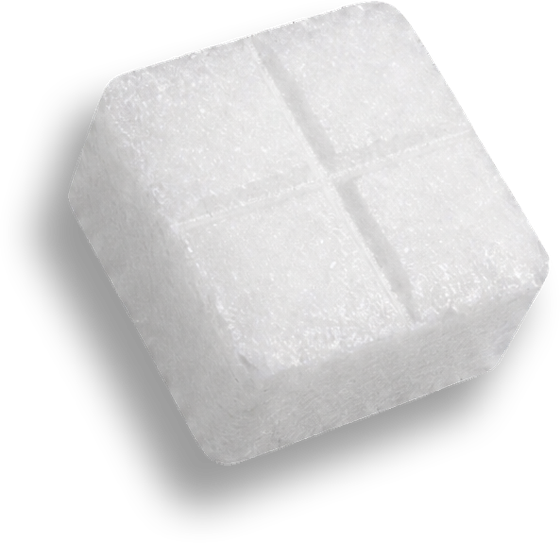
Ketamine therapy is the use of ketamine to treat depression, anxiety and related conditions. The FDA approved ketamine as an anesthetic in 1970. It comes in four main forms: an IV infusion at a clinic, esketamine nasal spray (Spravato) at a clinic, higher-dose sessions at home, and a daily low dose at home.
Joyous provides low-dose, personalized, at-home ketamine therapy for depression, anxiety and related conditions such as PTSD. Directed by licensed clinicians, our protocol is continuously adapted to each patient via a system of daily check-ins. Ketamine for mental health is prescribed off-label.
A high dose by drip at a clinic, in a series of sessions, sometimes with a therapist in the room. You are not coherent or aware of your environment during the session, and need a ride home.
A nasal spray taken at a certified clinic under observation, alongside an oral antidepressant. You are not coherent or aware of your environment during the session.
A larger dose taken at home as a set number of weekly sessions. You are not coherent or aware of your environment during the session; a sitter is often required.
A small daily dose (a ketamine troche) that dissolves in your mouth. Tailored to each patient, taken at home. You are coherent and aware of your environment. Fits into daily routines.
A different system than antidepressants. Glutamate, not serotonin.
Chronic stress and depression have been shown to break down the brain's communication network, causing patients to feel stuck in negative thought loops and patterns. By boosting glutamate signaling, ketamine can promote neuroplasticity, the brain's ability to form new connections and adapt over time. It can also encourage the growth of new synapses to support more flexible and resilient thinking. One key result of this process is the increase of BDNF, a protein that supports the growth and repair of brain cells.
Outcomes measured in 66,727 Joyous patients in 29 states.
Higher response and remission-range figures than SSRIs or higher-dose ketamine programs have published.
In STAR*D, the largest trial of SSRIs, 47% of patients responded and 28% reached remission on their first antidepressant. Different studies and populations, not head-to-head trials.
Your dose is found, not guessed. Start low. Check in daily. Your clinician adjusts until it's right.
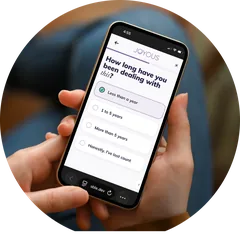

Treatment starts low and rises in small steps only as tolerated, until your clinician finds your lowest effective dose. There is no standard dose: yours is set from your own daily check-ins, and every dose change is approved by a licensed clinician.
More on ketamine troches and low dose ketamine →
Subtle by design, not a trip.
It is less about an altered state and more like clearing the fog off your windshield. You remain completely in the driver's seat, taking your dose and getting on with your day.
Relaxed.
Subtle.
Open.
Share of patients reporting each feeling in their daily check-ins during treatment · 30,355 patients
You stay coherent and aware throughout. Side effects at this dose are mostly mild and fade quickly—about 1 in 4 patients report feeling a bit lightheaded or floaty. Because the protocol is explicitly designed not to produce a high, the risk of developing a ketamine problem during treatment is judged to be low.
Most people don't come to feel less bad. They come to feel good.
No. The Joyous dose is designed not to: you stay coherent and aware throughout. Most people describe it as calming rather than intoxicating. Because the dose is designed not to produce a high, the risk of developing a ketamine problem during treatment is judged to be low in Joyous outcomes data.
Our low-dose protocol is designed to keep you fully present and coherent during treatment. After about 15 minutes you may notice a subtle calm and possibly some lightheadedness that quickly dissipates. While we recommend taking a moment for meditation or reflection, many patients proceed with their daily routines. Some patients feel a little "out of it" for 30 to 40 minutes. If such effects occur, the dose can be split in two. Over the first weeks your dose is adjusted from your daily check-ins, so if the feeling isn't right it will get adjusted.
Antidepressants are generally described as taking four to eight weeks to work. In the Joyous cohort the average depression score had dropped 38% by the end of week one, and the typical patient's score was cut in half within about 16 days. That is a median among people who responded and stayed in treatment; half took longer, and reaching the remission range took a median of 48 days.
At Joyous, ketamine treatment is a small daily dose, not a series of sessions. Your clinician starts you low and finds your lowest effective dose over the first weeks; most of the change in depression scores showed up in the first six weeks. After that you move to maintenance: stay on your dose, keep checking in, adjust as needed with your clinician. At this dose ketamine is not addictive, and there is no set number of treatments to complete.
Yes, in Joyous outcomes data: 86% of patients who started with moderate or worse depression (PHQ-9 of 10 or more) cut their score in half or better within six weeks, and 54% finished in the range clinicians call remission. Anxiety ran ahead: 87% response and 59% in the remission range (GAD-7). Measured among patients who stayed in treatment; no control group; individual results vary.
At-home ketamine treatment rests on three things: a low daily dose designed not to produce a high, screening by a licensed clinician before you start, and daily check-ins so the dose only moves when your clinician approves it. You stay coherent and aware throughout; the most common side effect in Joyous outcomes data was drowsiness (about 1 in 4 patients in week one, fewer than 1 in 5 by week six). Do not drive for 1 to 2 hours after a dose.
Yes. Ketamine is a federally controlled prescription medication: legal when prescribed by a licensed clinician, and prescribed off-label for depression, anxiety and PTSD. Joyous clinicians prescribe it in 29 states. State by state →
Many patients continue their existing antidepressant during treatment. Your clinician reviews your current medications at your video assessment and decides what is compatible. Bring your medication list.
Many patients pair their dose with a therapy session, as directed by your provider. The Joyous dose keeps you coherent and aware; if therapy is by video, take your dose about 15 minutes before and stay home afterward. Do not drive for 1 to 2 hours after a dose; if therapy is in person, have someone drive you.
No, but many people are. 38% of Joyous patients were in talk therapy at the same time, rising to 44% among those with moderate or worse symptoms. If therapy is out of reach, the Joyous patient app includes curated treatment courses and resources you can work through on your own.
Spravato is esketamine, a nasal spray FDA-approved for treatment-resistant depression, taken under observation at a certified clinic. Clinic infusions are higher doses, also given under observation. Joyous prescribes racemic ketamine off-label as a low daily dose you take at home, adjusted from your own check-ins. The point of the low dose is that no one needs to sit with you while you take it, paired with proper mental-health follow-up.
Joyous costs $129 a month on the plan with a three-month commitment, or $159 a month with no commitment, which drops to $129 after three months. Both include the medication. See what's included →
Insurance does not cover Joyous. HSA and FSA funds are accepted.
It depends on your state. Shipping frequency is set so you always have medication for the month; it is separate from monthly billing.


